
Raleigh luxury home prices generally exceed those in Charlotte, Durham, and Greensboro due to high demand for Inside the Beltline (ITB) neighborhoods and limited inventory. Buyers in Raleigh pay a premium for historic character, walkability, and proximity to the state capital. This price gap reflects a market where location and lifestyle drive value more than square footage alone. according to Campus Transportation for
The Premium of Inside the Beltline
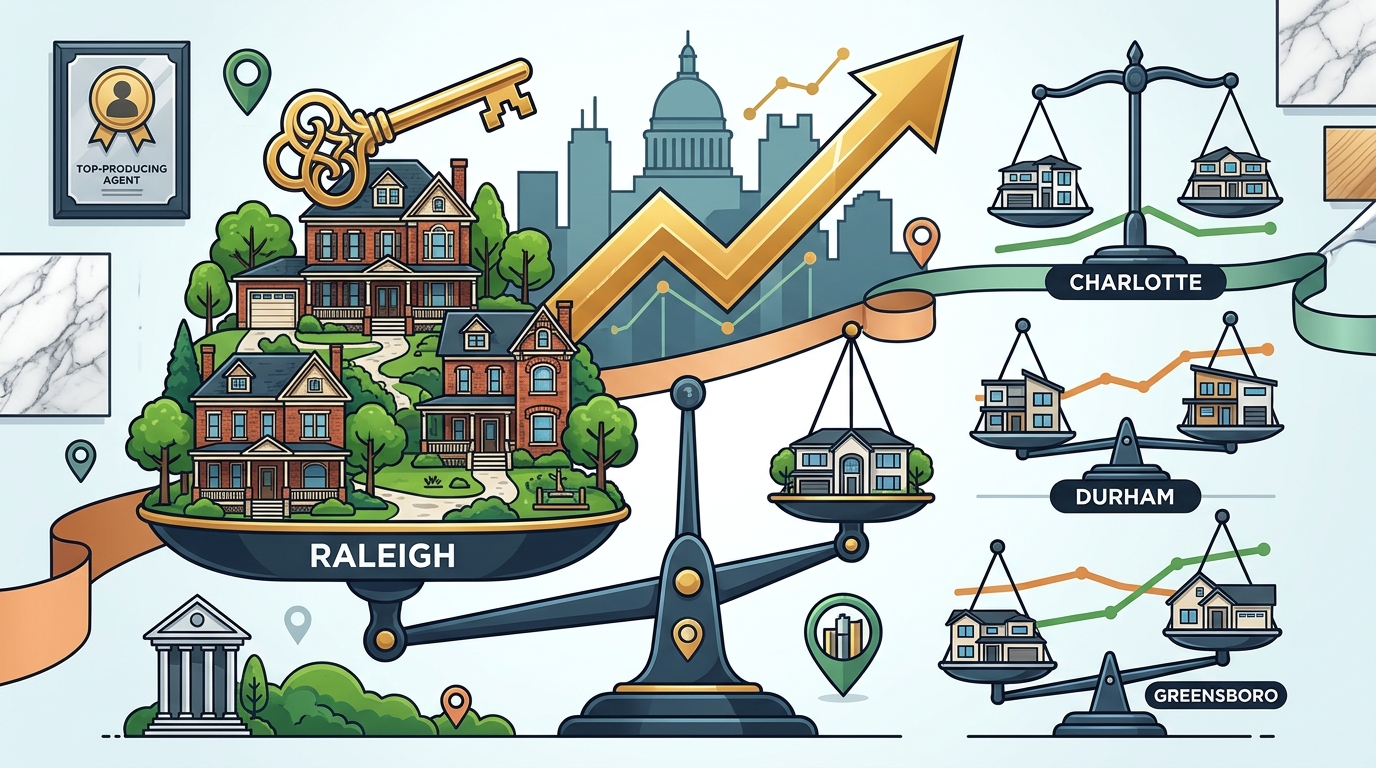
Raleigh’s luxury market is defined by the Inside the Beltline (ITB) area, which includes neighborhoods like Mordecai, Five Points, and Hayes Barton. Inside the Beltline is the geographic area within the I-440 loop that commands the highest price per square foot in the Research Triangle. These neighborhoods feature established housing stock, historic architecture, and walkable streets that are scarce in newer suburban developments. The scarcity of buildable land in these central pockets creates a structural price floor that keeps luxury values elevated.
For example, a custom home in Budleigh or a renovated Victorian in Historic Oakwood often trades at a significant premium compared to similar square footage in newer subdivisions outside the loop. Buyers are paying for the irreplaceable character and community feel of these districts. This dynamic means that while a buyer might find a larger home for less money in the suburbs, the resale value and lifestyle appeal of an ITB property often justify the higher entry price.
Charlotte: The Scale Difference
Charlotte is North Carolina’s largest city and offers a broader luxury market with more inventory. However, the price dynamics differ significantly from Raleigh. Charlotte’s luxury market is driven by large estate homes in suburbs like South Park and Myers Park, which often feature larger lots and more modern amenities. While Charlotte has high-end properties, the price per square foot in its core luxury enclaves is typically lower than Raleigh’s ITB neighborhoods.
The implication for buyers is that Charlotte offers more space for the money, but Raleigh offers a denser, more urban lifestyle. A buyer seeking a 5,000-square-foot home with a large yard may find better value in Charlotte’s suburbs. Conversely, a buyer prioritizing walkability, historic charm, and proximity to downtown amenities will find that Raleigh’s prices reflect that specific lifestyle preference. The two cities serve different luxury buyer profiles, with Raleigh favoring urban-centric living and Charlotte favoring suburban estate living.
Durham and Greensboro: The Value Alternatives
Durham and Greensboro offer more affordable luxury alternatives for buyers who want high-end finishes without the Raleigh price tag. Durham’s luxury market has grown significantly, with neighborhoods like North Durham and the Hayti District attracting buyers seeking a vibrant urban experience at a lower cost. Greensboro offers a mix of historic and modern homes with prices that are generally more accessible than Raleigh’s core.
However, these cities lack the depth of historic inventory and the specific cultural amenities that define Raleigh’s ITB market. A buyer in Durham may find a beautifully renovated home for 20-30% less than a comparable property in Raleigh. The trade-off is that these markets may not offer the same level of walkability or the specific historic prestige associated with Raleigh’s oldest neighborhoods. For investors, Durham and Greensboro may offer higher growth potential, but for lifestyle buyers, Raleigh’s established luxury market remains the benchmark.
Asheville: The Mountain Premium
Asheville presents a unique luxury market driven by its mountain setting and tourism appeal. Luxury homes in Asheville often feature views, larger lots, and a distinct architectural style that reflects the region’s history. Prices in Asheville’s luxury segment can be comparable to or even exceed Raleigh’s in certain pockets, particularly for properties with significant views or acreage.
The key difference is the lifestyle. Asheville buyers are often paying for a retreat-like experience, with a focus on nature and outdoor recreation. Raleigh buyers are paying for urban convenience, cultural institutions, and a professional hub. A buyer who values a quiet, mountain retreat may find Asheville’s prices justified, while a buyer who wants a walkable, urban center will find Raleigh more suitable. The two markets cater to different definitions of luxury, with Asheville emphasizing natural beauty and Raleigh emphasizing urban sophistication.
Key Takeaways
- Raleigh’s ITB neighborhoods command a price premium due to limited inventory and high demand for historic, walkable living.
- Charlotte offers more space for the money but lacks the dense, urban luxury lifestyle of Raleigh.
- Durham and Greensboro provide more affordable luxury options with high-end finishes but less historic prestige.
- Asheville’s luxury market is driven by views and mountain lifestyle, offering a different value proposition than Raleigh’s urban core.
- Buyers should align their price expectations with their lifestyle priorities, as location drives value more than square footage in Raleigh.
- Working with a local expert is crucial for navigating the nuances of each city’s luxury market.
Frequently Asked Questions
Is Raleigh more expensive than Charlotte for luxury homes?
Raleigh’s Inside the Beltline neighborhoods are typically more expensive per square foot than Charlotte’s luxury suburbs. Charlotte offers more space for the money, but Raleigh commands a premium for its urban, historic, and walkable lifestyle.
Which North Carolina city has the most affordable luxury homes?
Durham and Greensboro generally offer the most affordable luxury homes in North Carolina. Buyers can find high-end finishes and renovated properties at lower price points than in Raleigh or Charlotte.
Why are Raleigh ITB homes so expensive?
Raleigh ITB homes are expensive due to limited buildable land, high demand for historic character, and walkability. These neighborhoods have a fixed supply of desirable lots, which drives up prices for existing homes.
Is Asheville a good alternative to Raleigh for luxury buyers?
Asheville is a good alternative for buyers who prioritize mountain views and a retreat-like lifestyle. However, it lacks the urban density and professional hub amenities that define Raleigh’s luxury market.
How does a local realtor help with price comparisons?
A local realtor provides insight into neighborhood-specific price trends and inventory levels. They can help buyers understand the true value of a property in context, avoiding overpayment in competitive markets.
Conclusion
Raleigh’s luxury home prices reflect a unique blend of historic charm, urban convenience, and limited inventory. While other North Carolina cities offer different value propositions, Raleigh remains the benchmark for those seeking a sophisticated, walkable lifestyle. To navigate these price dynamics and find the right property, contact Anne Godwin Luxury Living for expert guidance tailored to your specific needs.