
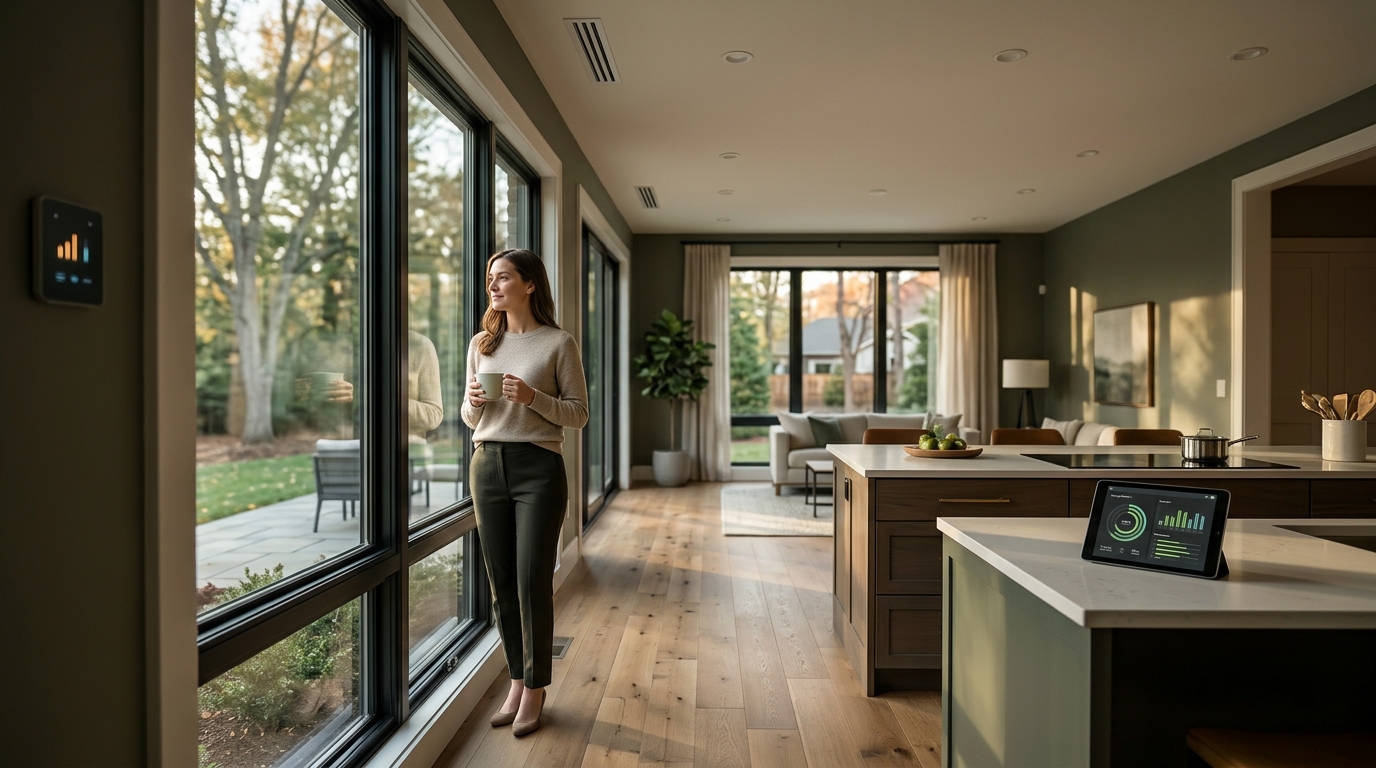
Modern construction standards and advanced technology significantly reduce the energy consumption of new homes compared to older structures. Families often find that their monthly utility bills drop substantially after moving into a newly built property. This financial relief is driven by superior insulation, efficient appliances, and smart home integration that older homes typically lack.
1. Superior Insulation and Air Sealing
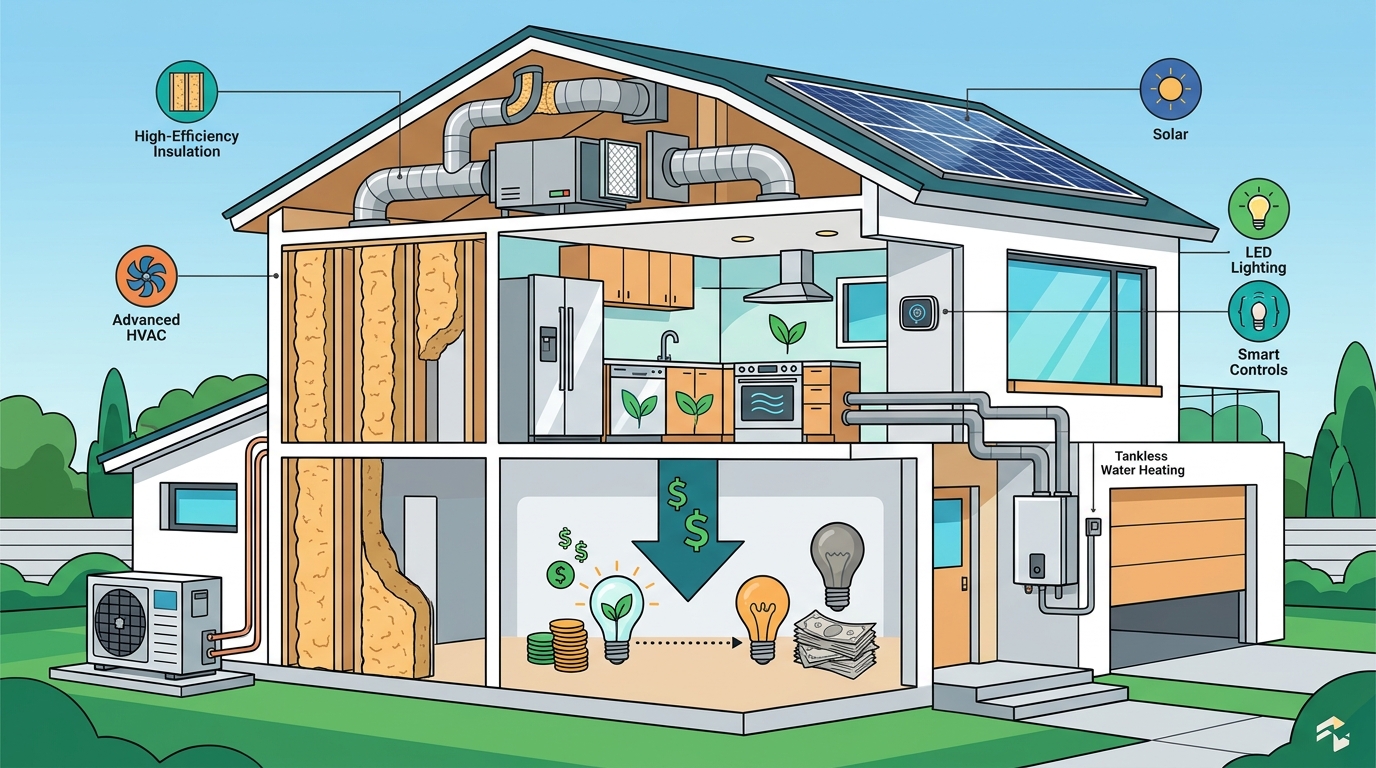
Modern building codes mandate tighter envelopes that prevent heat loss. New construction projects utilize advanced insulation materials and rigorous air sealing techniques that older homes rarely possess. This creates a thermal barrier that keeps conditioned air inside the home, reducing the workload on heating and cooling systems. The result is a more stable indoor temperature and lower energy consumption throughout the year.
2. High-Efficiency HVAC Systems
Newer furnaces and air conditioners operate at significantly higher efficiency ratings. Modern HVAC units are designed to meet or exceed current energy efficiency standards, often featuring variable speed compressors and smart thermostats. These systems adjust their output based on real-time demand, avoiding the energy waste associated with older, fixed-speed units. This precision leads to substantial savings on monthly utility bills.
3. Energy Star Certified Appliances
Standard appliances in new builds are often pre-certified for energy efficiency. Builders frequently include Energy Star certified refrigerators, dishwashers, and washers as part of the base package. These appliances use less electricity and water to perform the same tasks as their older counterparts. Over time, the cumulative savings from these efficient devices contribute to a lower overall utility cost.
4. Advanced Window Technology
Double and triple-pane windows with low-E coatings minimize thermal transfer. New homes are equipped with modern glazing that reflects infrared light while allowing visible light to pass through. This technology helps keep the home cooler in summer and warmer in winter, reducing the need for mechanical heating and cooling. Older single-pane windows are a primary source of energy loss in pre-1980s construction.
5. Smart Home Integration
Connected devices allow for automated energy management and monitoring. Many new builds come with pre-wired smart home systems that control lighting, temperature, and security. Homeowners can schedule these systems to optimize energy use based on their daily routines. This level of control is difficult to achieve in older homes without significant retrofitting costs.
6. Efficient Water Heating
High-efficiency water heaters reduce the energy required to heat water. New construction often includes tankless or high-efficiency tank water heaters that use less energy than older standard models. These systems heat water on demand or maintain efficiency through superior insulation. This leads to lower gas or electric bills, particularly for families with high water usage.
7. Tax Credits and Incentives
Choosing the Right Home for Your Budget
When deciding between a historic home and a new build, consider your long-term utility budget. If minimizing monthly energy costs is a priority, a new construction home offers immediate and ongoing savings through superior efficiency. For those interested in the specific energy benefits of new builds in the Raleigh area, exploring the different build options can help you make an informed decision.
Frequently Asked Questions
Do new builds always have lower utility bills than older homes?
Generally, yes. New builds are constructed to current energy codes, which are significantly stricter than those in place when most older homes were built. However, individual usage habits and local climate conditions can affect the exact savings amount.
What is the most impactful upgrade for reducing energy costs?
Proper insulation and air sealing are often the most impactful upgrades. They form the foundation of an energy-efficient home by preventing conditioned air from escaping, which reduces the load on HVAC systems.
Are there tax incentives for buying an energy-efficient new home?
Yes, builders can receive tax credits for constructing energy-efficient homes, which may be passed on to buyers. Homeowners may also qualify for credits for specific energy improvements like solar panels or efficient windows.
How do smart home features save money?
Smart home features allow for automated control of heating, cooling, and lighting. By optimizing these systems based on occupancy and time of day, homeowners can avoid wasting energy when the home is unoccupied.
Where can I find new construction homes in Raleigh?
For those looking for new construction or luxury homes in Raleigh, Anne Godwin Luxury Living provides expert guidance on the local market and available new build opportunities.