
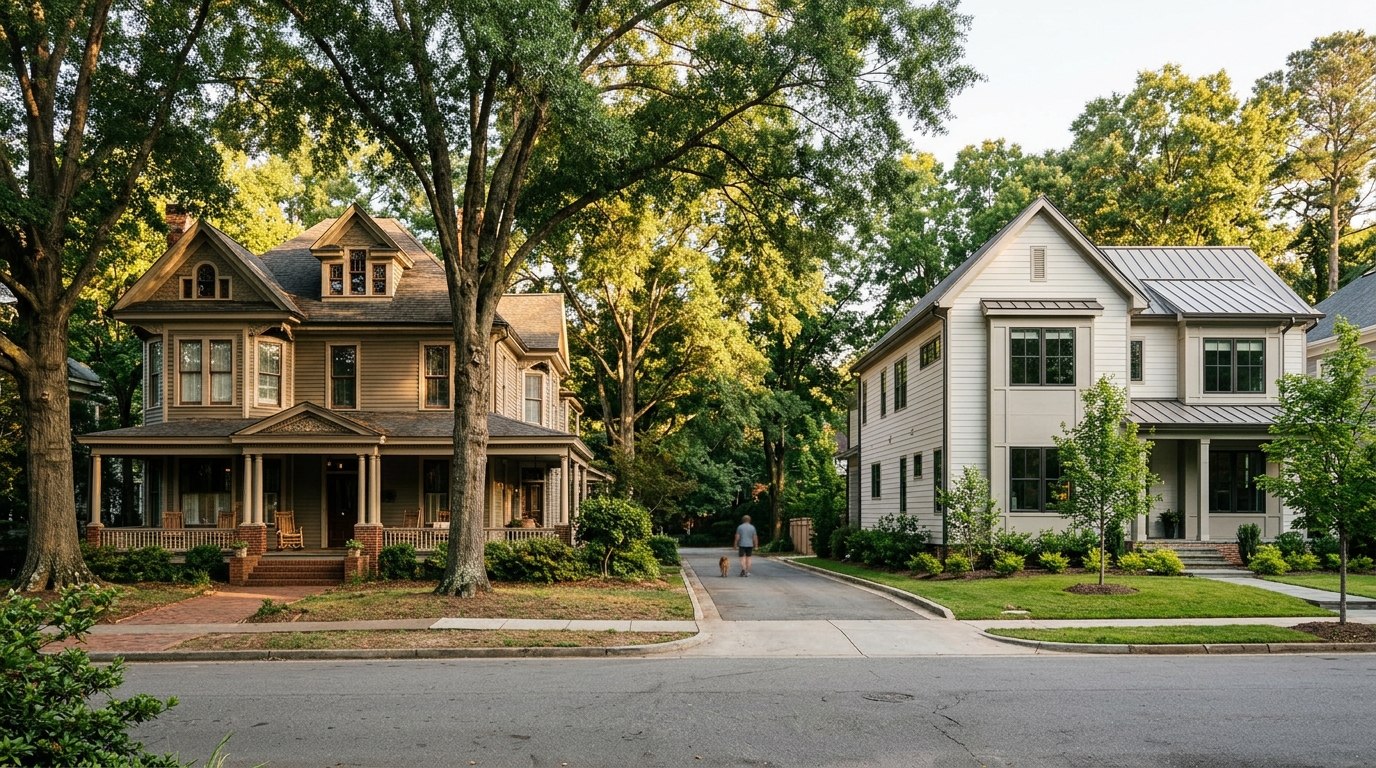
New construction is generally more energy efficient than historic homes due to modern building codes and advanced insulation. For a family moving to Raleigh, a new build typically saves more on utility bills over time, while a historic home may require significant upfront investment to achieve similar efficiency. Anne Godwin Luxury Living helps buyers weigh these costs against lifestyle preferences in the local market.
New Construction: The Efficiency Standard
Key Efficiency Features
Long-Term Savings
While new builds have a higher purchase price, the lower operating costs can offset this over time. Energy efficiency is a key factor in the total cost of ownership. Families should consider the long-term savings when comparing a new build to an older home.
Historic Homes: Character and Challenges
Efficiency Challenges
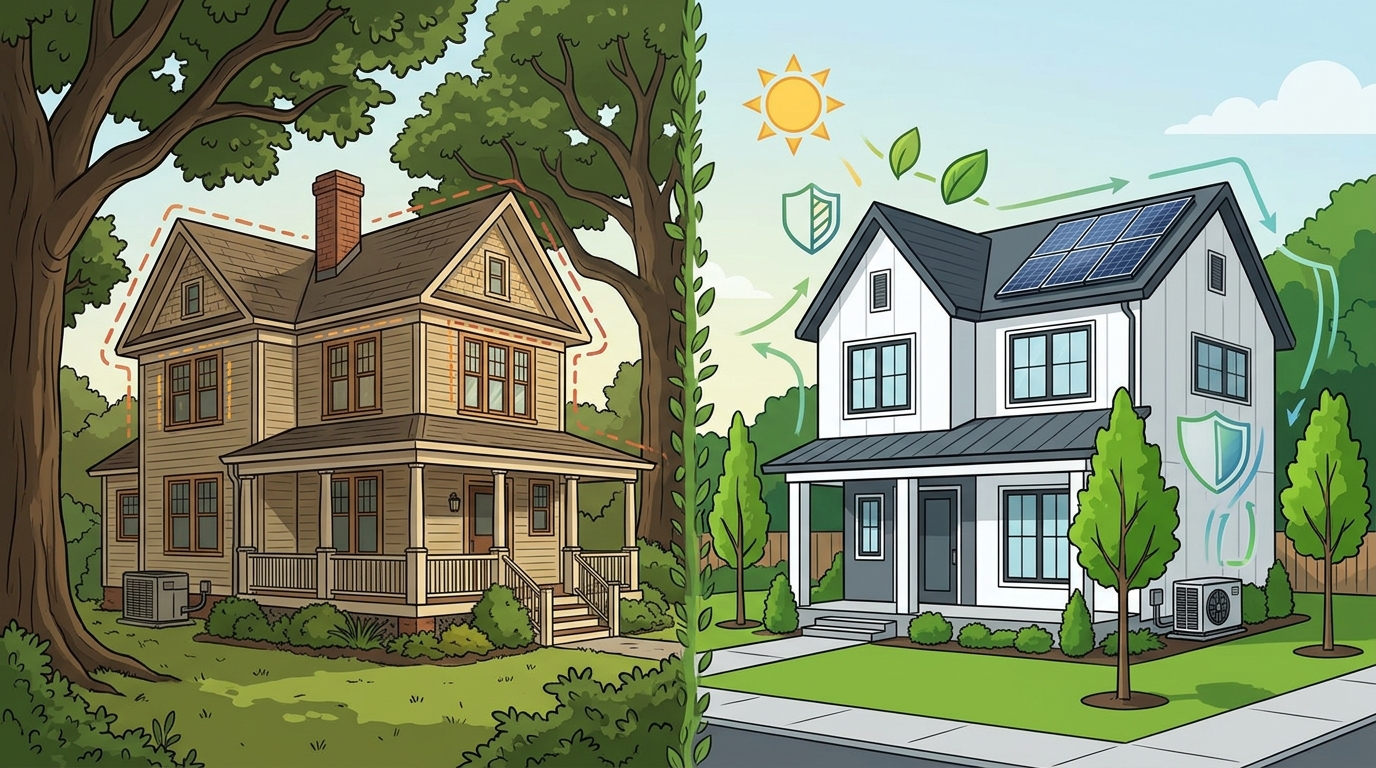
Historic homes often have gaps in the building envelope. This allows air to leak in and out, increasing energy use. The original windows and doors are often single-pane and poorly sealed. Upgrading these components can be expensive and may affect the home's historic character.
Renovation Potential
Despite these challenges, historic homes can be made more efficient with targeted renovations. Adding insulation, sealing air leaks, and upgrading windows can improve performance. However, these upgrades require a significant upfront investment. Buyers should budget for these costs when considering a historic property.
Comparison: Energy Efficiency and Costs
| Criteria | New Construction | Historic Home |
|---|---|---|
| Insulation Quality | High R-value, modern materials | Variable, often inadequate |
| Air Sealing | Tight building envelope | Prone to air leaks |
| Window Efficiency | Double or triple-pane, low-E | Single-pane, original glass |
| HVAC System | High-efficiency, modern units | Older, less efficient systems |
| Upfront Cost | Higher purchase price | Lower purchase price |
| Renovation Cost | Minimal for efficiency | High for efficiency upgrades |
Choosing the Right Option for Your Family
Choose a new build if you prioritize low utility bills and minimal maintenance. This option suits families who want a move-in ready home with modern amenities. The higher upfront cost is offset by long-term savings and comfort.
Choose a historic home if you value architectural character and are willing to invest in renovations. This option suits buyers who appreciate the charm of older homes and have the budget for efficiency upgrades. It is a good fit for those who plan to stay in the home for a long time.
Frequently Asked Questions
Can a historic home be as efficient as a new build?
Yes, with significant investment. Upgrading insulation, windows, and HVAC systems can bring a historic home close to the efficiency of a new build. However, the cost of these upgrades is often high and may not be fully recouped in the home's value.
What is the biggest energy drain in a historic home?
Air leaks are the biggest energy drain. Gaps around windows, doors, and in the attic allow conditioned air to escape. Sealing these leaks is a cost-effective way to improve efficiency without major structural changes.
Are there incentives for upgrading a historic home's efficiency?
How does the location affect energy efficiency?
Location affects energy efficiency through climate and orientation. In Raleigh, homes with good shading and proper orientation can reduce cooling costs. New builds are often designed with these factors in mind, while historic homes may not be.
Is it worth buying a historic home if I plan to sell in 5 years?
It depends on the market. If you plan to sell in a short time, the high cost of efficiency upgrades may not be recouped. New builds are often easier to sell to buyers looking for low-maintenance homes. Consider your long-term plans when making this decision.
Conclusion
New construction offers superior energy efficiency and lower operating costs, making it a strong choice for families prioritizing savings. Historic homes provide character and charm but require significant investment to achieve similar efficiency. To plan your next move, contact our team. Learn more: Contact Top Real Estate.